
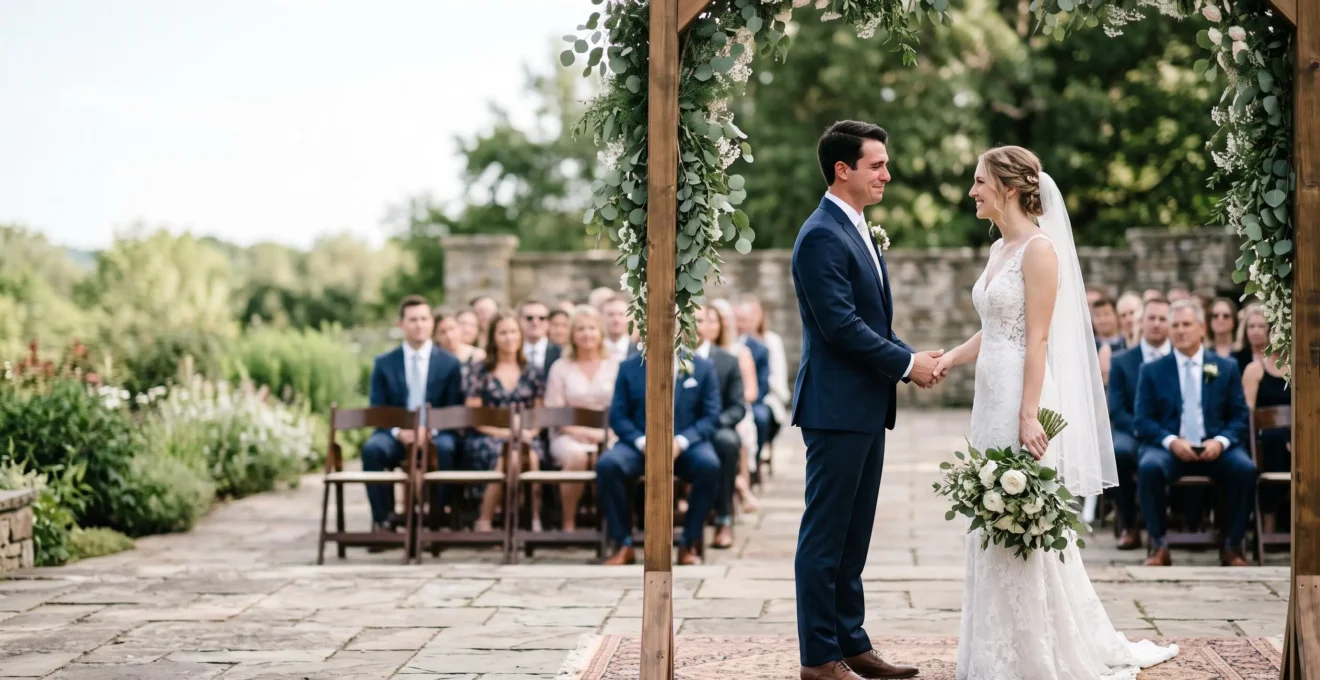
The most powerful wedding photos don’t capture the smile, but the split-second involuntary facial twitch that happens right before it.
- Authentic emotions “leak” through micro-expressions lasting less than half a second, revealing feelings the subject isn’t consciously expressing.
- Recognising these cues is a trainable, technical skill based on reading specific muscle groups (Action Units), particularly around the eyes.
Recommendation: Shift your focus from anticipating big, predictable moments to decoding the subtle, pre-peak facial signals that tell the real story of the day.
As a wedding photographer, you’ve likely felt it. You review a gallery filled with laughter, tears, and jubilant smiles, yet a sense of something missing lingers. The images are happy, but are they truthful? You’ve captured the performance of joy, but have you documented the authentic, unfiltered emotion that lies beneath? The common advice is to focus on the big moments—the first kiss, the ring exchange, the toasts. We are told to be unobtrusive, a fly on the wall, hoping to catch lightning in a bottle.
But this passive approach leaves too much to chance. It relies on being in the right place when a major emotional wave crests. What if the key wasn’t simply witnessing emotion, but deconstructing and anticipating it? What if you could learn to read the subtle, physiological tells that forecast an emotional peak seconds before it happens? This guide moves beyond the platitudes of “capturing candids.” We will approach the human face not as a mysterious canvas of feeling, but as a readable map of muscular actions.
By combining the observational precision of a psychologist with the craft of a photographer, you will learn to see what most miss. This is not about mind-reading; it is about muscle-reading. We will explore the science of micro-expressions—the fleeting, involuntary facial movements that betray true feeling. You will learn to distinguish genuine Duchenne smiles from social ones, anticipate laughter during speeches by reading an audience’s posture, and understand why looking at your camera screen is the fastest way to miss the day’s most profound image. The goal is to transform you from a reactor to an anticipator, capable of capturing the silent, 0.5-second truth that gives an image its soul.
This article provides a structured methodology for developing this crucial skill. Each section builds on the last, moving from the foundational science of micro-expressions to the practical, in-the-field techniques required to capture them effectively. Follow this guide to train your eye and elevate your work from simply beautiful to profoundly true.
Contents: Decoding the Nuances of Wedding Emotion
- Why Micro-Expressions Captured in 0.5 Seconds Carry More Emotional Truth Than 5-Second Posed Smiles
- How to Train Your Eye to Detect Subtle Facial Micro-Expressions 1 Second Before They Appear
- Continuous Burst Mode or Single Decisive Release: Which Captures Better Micro-Expressions During Wedding Vows
- The Chimping Mistake That Makes You Miss the Second Micro-Expression While Reviewing the First
- How to Read Body Language Cues That Signal Emotional Moments 10 Seconds Before They Peak
- Why Authentic Laughter Erupts in Predictable Patterns During Wedding Speeches and Toasts
- How to Recognise Authentic Emotion Versus Performed Happiness in Wedding Photography
- Which Wedding Moments Generate the Most Powerful Micro-Expressions Worth Intensive Focus
Why Micro-Expressions Captured in 0.5 Seconds Carry More Emotional Truth Than 5-Second Posed Smiles
In photography, we are conditioned to value the “macro” expression: the wide, sustained smile held for the camera. However, from a psychological standpoint, this is often the least honest expression a person can produce. The real emotional data lies in the micro-expressions—the brief, involuntary facial movements that leak a person’s true feelings before their conscious brain can assert control. The distinction is not just philosophical; it’s temporal. Research shows that while posed macro-expressions last between 0.5 and 4 seconds, true micro-expressions are incredibly fleeting, often lasting only 40 to 200 milliseconds.
These are not simply smaller smiles; they are neurologically different. A posed or “social” smile primarily activates the zygomatic major muscle, which pulls the lip corners up. It’s a voluntary action. A genuine smile of enjoyment, known as a Duchenne smile, is involuntary. It involves not only the lip corners but also the orbicularis oculi, the muscle surrounding the eye. This dual activation is the key. As researchers Frank & Ekman noted, the constriction around the eye is a lawful behavior, a reliable marker for true enjoyment that is much harder to fake and is less dependent on social context.
For a photographer, this means the most truthful portrait of happiness isn’t the wide, toothy grin held for five seconds, but the split-second flash of crow’s feet and cheek-raising that precedes it. That is the moment of emotional leakage. The posed smile that follows is often a performance for the camera and the social situation, an edited version of the raw feeling. Capturing the micro-expression is capturing the unedited truth of the moment, a goal that requires a fundamental shift in what we, as observers, choose to look for.
How to Train Your Eye to Detect Subtle Facial Micro-Expressions 1 Second Before They Appear
The human eye is not naturally equipped to register events that last less than a fifth of a second. These signals exist below the normal threshold of conscious perception, which is why studies suggest that approximately 80% to 90% of untrained observers miss these critical emotional cues entirely. Seeing micro-expressions is not a gift; it is a trained skill, akin to learning a new language. Your brain must be deliberately rewired to recognise these fleeting patterns. The goal isn’t just to see the expression as it happens, but to build a mental library so robust that you can anticipate the context in which they are likely to appear.
This training moves beyond just watching people. It requires structured drills designed to shorten your reaction time and sharpen your pattern recognition. Methodologies used in psychological research, such as the Micro Expression Training Tool (METT), are built on this principle. They use controlled exposure, flashing images of the seven universal expressions (happiness, sadness, anger, fear, surprise, contempt, and disgust) for fractions of a second between neutral faces. This forces the brain to process the visual information faster and more efficiently. You are not just learning what sadness looks like, but what sadness looks like in 100 milliseconds.
Before attempting to read complex emotional blends in a chaotic wedding environment, you must master these fundamentals. By repeatedly practicing with these core categories, you create a baseline. Only then can you effectively apply this skill in the wild, such as by watching muted film scenes and predicting emotional beats just from facial cues. This disciplined practice is what separates the lucky photographer from the intentional one.
Your Action Plan: Drills for Micro-Expression Recognition
- Controlled Exposure Drills: Utilise online training tools that present universal expressions (e.g., METT) between neutral faces for very short durations to sharpen your recognition speed and accuracy.
- Focus on the Core Seven: Master the seven universal expressions (happiness, sadness, fear, anger, surprise, contempt, disgust) individually before trying to decode complex or blended emotions.
- Practice Consistently: Dedicate short, regular sessions to these drills. Research confirms that consistent training significantly improves recognition accuracy for expressions under 500ms.
- Apply to Muted Media: Watch movies or documentaries with the sound off. Pause before a key emotional moment and try to identify the micro-expressions on the actors’ faces, predicting their next action.
- Observe in Low-Stakes Environments: Before the wedding day, practice observing people in cafes or public transport. Focus on identifying fleeting facial shifts without the pressure of capturing them.
Continuous Burst Mode or Single Decisive Release: Which Captures Better Micro-Expressions During Wedding Vows
The technical debate between “spraying and praying” with a high-speed burst and waiting for the “decisive moment” takes on new meaning when hunting for micro-expressions. A high-frame-rate burst seems like the obvious solution to capturing a 200-millisecond event. While it can work, it’s an inefficient, data-heavy approach that often yields sequences of near-identical frames and fills buffers at critical times. More importantly, it encourages a reactive mindset rather than a predictive one. The sound and action of a 20fps burst can also draw attention, making subjects self-conscious and stifling the very authenticity you seek to capture.
A more effective strategy is a hybrid approach: the deliberate, short burst. Instead of holding the shutter down through an entire vow, the trained photographer anticipates the emotional flashpoint—a slight tremble in the lip, a welling of the eyes, a catch in the breath—and fires a short, controlled burst of 3-5 frames precisely at that peak. This method combines the anticipation of the single-shot philosophy with the safety net of a burst, maximising your chances of catching the apex of the micro-expression without generating thousands of redundant files.
To execute this, your technical setup must support your observational goals. You need to be an invisible presence. This is achieved through specific gear and positioning choices that allow you to read the scene without influencing it. Your goal is to become part of the background, a quiet observer whose presence is quickly forgotten.
- Use Silent Shutter Mode: During quiet moments like ceremonies, vow exchanges, or speeches, the electronic shutter is your most crucial tool. The absence of shutter sound is essential for capturing genuine reactions without people realising they are being photographed at that exact second.
- Employ Long Lenses: An 85mm, 135mm, or 70-200mm lens allows you to remain at a distance, outside the immediate personal space of the subjects. This distance fosters a sense of privacy and encourages more natural, unguarded behaviour.
- Shoot Through Natural Frames: Enhance your invisibility by using elements in the environment. Shooting through doorways, between guests’ shoulders, or around floral arrangements breaks your silhouette and makes you less of a focal point.
This disciplined approach ensures that when a micro-expression appears, you are already in position and technically prepared to capture it cleanly and without intrusion. It is the fusion of psychological observation and technical readiness.
The Chimping Mistake That Makes You Miss the Second Micro-Expression While Reviewing the First
“Chimping”—the habit of immediately looking at the back of the camera after taking a shot—is the single greatest enemy of capturing authentic emotional sequences. A micro-expression is rarely an isolated event. It is often part of a chain reaction. A flash of surprise might be followed by a micro-expression of joy, which then resolves into a conscious, social smile. By dropping the camera from your eye to check the first shot, you are guaranteeing you will miss the second and third beats of the emotional story. You have captured a word, but missed the sentence.
The core of documentary photography is staying immersed in the present moment, translating the energy of the unfolding scene into a tangible image. Breaking your observational flow to review a past moment shatters this immersion. You switch from being a participant-observer to a technician. In those two or three seconds spent looking at your screen, the emotional peak has passed, and a new, equally valuable moment may have been missed entirely. That fleeting look of pride on a father’s face as he watches the first dance happens only once. If you are checking your exposure from the previous shot, it’s gone forever.
Case Study: The Documentary Flow-State Approach
A seasoned documentary wedding photographer explains that their goal is to create images that make viewers *feel* the moment, not just see it. This philosophy requires maintaining a “flow state” where the camera becomes an extension of the eye. Instead of pausing to check individual frames for technical perfection, the focus remains entirely on the unfolding scene, reading the room’s energy and anticipating the next emotional beat. This approach is rooted in the belief that staying present and observing the story is more critical than confirming the capture of a single, isolated frame. It’s about trusting your skills and your gear to do their job so you can do yours: witnessing.
To overcome this habit, you must cultivate immense trust in your technical skills and your equipment. Know your settings, trust your autofocus, and accept that not every single frame will be perfect. The priority is to remain in observation mode.
- Anticipate and React: Train yourself to see moments developing seconds before they happen. Watch for the subtle cues and be ready to shoot, rather than reacting after the fact and then checking your work.
- Embrace the Role of a Silent Presence: Think of yourself as blending into the background. Move quietly, read the room, and understand the rhythm of the day. Your job is to observe, not to interact with a screen.
- Schedule Your Review: Only review your images during distinct lulls in the action—when a new speaker is walking to the podium, during the transition between the ceremony and reception, or when there is a clear and definitive break. Never during an active emotional sequence.
How to Read Body Language Cues That Signal Emotional Moments 10 Seconds Before They Peak
Micro-expressions are the final, fleeting signal of an emotional state, but they don’t occur in a vacuum. They are often preceded by a series of larger, more readable body language cues. By learning to identify these pre-peak cues, you can shift from reacting to an emotion to anticipating it, giving you precious seconds to compose your shot and prepare for the moment of capture. Your focus should be on detecting the build-up of emotional tension in the body.
This is about looking for shifts from a baseline state. A person about to be overcome with emotion will often exhibit subtle changes in their posture, gestures, and even their breathing. These are the tells that an emotional dam is about to break. Your role as a psychologist-photographer is to scan for these deviations. Is someone who was relaxed now holding their hands tightly? Is a person’s breathing becoming more shallow and rapid? Did someone just break eye contact to look down, a classic sign of processing a strong internal feeling?
During vows or speeches, these cues become even more pronounced and predictable. You can train your eye to spot the specific indicators that precede a powerful reaction:
- The Devoted Glance: During vows or toasts, watch for the tiny, repeated glances between the couple or from a parent to their child. These quick, connection-seeking looks often precede a tear or a heartfelt smile.
- Vocal and Pacing Shifts: Listen as much as you watch. A crack in someone’s voice, a sudden pause, or an acceleration in their speech pattern are powerful auditory cues that a facial expression is about to follow. When a speaker’s voice trembles, your lens should already be on their face, or on the face of the person they are addressing.
- Anticipatory Gestures: Before a laugh or a tear, people often make small, self-soothing gestures. A hand might come up to the mouth, they might touch their neck, or their posture might shift as they brace for the emotion. These are your 10-second warnings.
By cataloging these pre-peak cues, you build a predictive model. You stop seeing a wedding as a series of random events and start seeing it as a sequence of emotional cause and effect, allowing you to be in the right place, focused on the right face, just before the moment happens.
Why Authentic Laughter Erupts in Predictable Patterns During Wedding Speeches and Toasts
Laughter during a wedding speech is not a random event; it follows a predictable, almost rhythmic, pattern of tension and release. For a photographer, understanding this rhythm is key to capturing genuine, uninhibited joy. The most common pattern during a toast or speech is the build-up, punchline, and echo. The speaker builds a story (tension), delivers the punchline (release), and the audience erupts. Your job is not to shoot the whole time, but to pinpoint the peak of that release.
Interestingly, scientific observation shows a physical manifestation of this pattern. A study on audience laughter found a strong negative correlation between the speaker’s kinetic energy and the audience’s laughter rate. The data, which showed a correlation of r = -0.75, supports the classic “stillness-before-punchline” pattern. Speakers often become physically still just before delivering the key line. This moment of quiet is your cue to ready your camera, focusing not on the speaker, but on the faces in the audience you’ve identified as most expressive—the parents, the siblings, the bridal party.
Once the laughter erupts, it’s also crucial to distinguish between authentic, Duchenne laughter and polite, social laughter. The same markers that identify a genuine smile apply here. A Duchenne laugh is an involuntary full-body and full-face event, while a social laugh is often contained and controlled.
- Eye Activation: Genuine laughter involves the orbicularis oculi muscles, causing the eyes to squint and “crow’s feet” to appear. A fake or polite laugh typically involves only the mouth, with the eyes remaining static.
- The Fade-Out: An authentic laugh doesn’t just stop; it fades out gradually. The body might still be shaking slightly even after the sound has subsided. A social laugh, by contrast, can switch off abruptly, especially once eye contact is broken.
By recognising the stillness before the punchline and identifying the Duchenne markers during the reaction, you can selectively capture the moments of purest joy, rather than just polite chuckles.
How to Recognise Authentic Emotion Versus Performed Happiness in Wedding Photography
The cornerstone of reading faces is the ability to differentiate between an authentic emotion and a performed one. As we’ve discussed, the Duchenne smile is the gold standard for genuine happiness. However, simply saying “look for the eye crinkles” is an oversimplification. To truly become an expert observer, you need a more granular field checklist based on Dr. Paul Ekman’s Facial Action Coding System (FACS). This system breaks down expressions into “Action Units” (AUs), which correspond to the movement of specific muscle groups.
A true enjoyment smile is a combination of two key actions: Action Unit 12 (Lip Corner Puller) and Action Unit 6 (Cheek Raiser). When you are scanning a room, you should be actively looking for the full set of markers created by these muscle movements.
- Cheeks and Eyes: In a genuine smile, the cheeks are pulled up, which in turn pushes up the skin below the eye, causing it to bag or bulge slightly. The lower eyelid itself moves up, making the eye aperture smaller.
- Crow’s Feet: The contraction of the outer part of the muscle around the eye socket (the orbicularis oculi, pars lateralis) creates the tell-tale wrinkles we call crow’s feet.
- The Non-Enjoyment Smile: A fabricated or social smile will feature the lip corner pull (AU 12) but will lack the crucial muscle activation around the eyes (AU 6). The absence of movement in the cheeks and eyelids is the giveaway.
This Duchenne marker is your most reliable tool. However, a final layer of psychological nuance is required. You must not treat this as an infallible lie detector. Recent studies have added a fascinating complication: with practice, many people can successfully fake a Duchenne smile. One study found that 71 per cent of participants could successfully imitate the muscle movements of a genuine smile on command.
What does this mean for a photographer? It means that while the presence of a Duchenne marker is a strong indicator of positive emotion, its context is everything. An authentic Duchenne smile erupts spontaneously as a reaction to a moment. A Duchenne smile that is held for a long time, produced on request (“smile for the camera!”), or appears without a clear emotional trigger is more likely to be a skilled performance. The truth, therefore, lies not just in the expression’s shape, but in its timing and spontaneity.
Key Takeaways
- The most truthful emotions are revealed in involuntary micro-expressions lasting less than 0.5 seconds, not in posed smiles.
- Seeing these expressions is a trainable skill based on recognising specific muscle movements (Action Units), especially the “Duchenne marker” around the eyes.
- Avoid “chimping” at all costs; staying in the moment to observe the entire emotional sequence is more valuable than checking a single frame.
Which Wedding Moments Generate the Most Powerful Micro-Expressions Worth Intensive Focus
Now that you have the tools to see and decode micro-expressions, the final piece is knowing where to point your lens. While any moment can produce an authentic emotion, certain parts of the wedding day are neurologically primed to generate them. These are moments of high emotional stakes, surprise, or transition, where the cognitive load is so high that the brain’s ability to “perform” is diminished, allowing true feelings to leak out. You must learn to identify these hotspots and focus your observational energy accordingly.
While the “big three” (first look, vows, first dance) are obvious, a deeper emotional story is often found in the smaller, in-between moments. The transitions are where guards are down. Focusing on these quieter details can reveal a depth of emotion not apparent in the main events. These are the moments that tell a more personal, intimate story of the day’s emotional landscape. Your intensive focus should be on these prime opportunities:
- The First Look: The initial half-second of impact before the rehearsed “wow” is where the purest surprise and joy reside.
- Vow Exchanges: Look for unscripted additions, trembling voices, or the quick, tearful glance at a parent right after a significant line.
- Parent Dances and Family Reunions: These moments are rich with decades of history. Focus on the subtle expressions of pride, nostalgia, and bittersweet tenderness.
- Candid Guest Reactions: During speeches, identify the guest who is most engrossed. Their face will mirror the story’s emotional arc.
- Behind-the-Scenes Nerves: The final moments of getting ready—a deep breath before leaving the room, a father’s hand on his daughter’s shoulder—are dense with anticipatory emotion.
Ultimately, your greatest tool is empathy mapped onto a timeline. Before the wedding, walk through the entire schedule and ask yourself: “Where is the emotional pressure highest? Where is the element of surprise greatest?” It might not be when the groom sees the bride, but when the bride’s grandmother sees her for the first time. It might be the look exchanged between the couple *after* the ceremony, a silent “we did it” that is more profound than the kiss itself. By identifying these probable emotional flashpoints, you can position yourself to capture the quiet truth that everyone else is too busy to see.
Begin applying this observational framework at your next event. Start small. Instead of trying to read everyone, choose one key person during one specific moment—the father of the bride during the ceremony, for instance. Your task is not just to photograph them, but to watch them. See if you can spot the pre-peak cues and the fleeting expressions we’ve discussed. This shift from passive picture-taking to active observation is the first step in transforming the emotional depth of your work.