
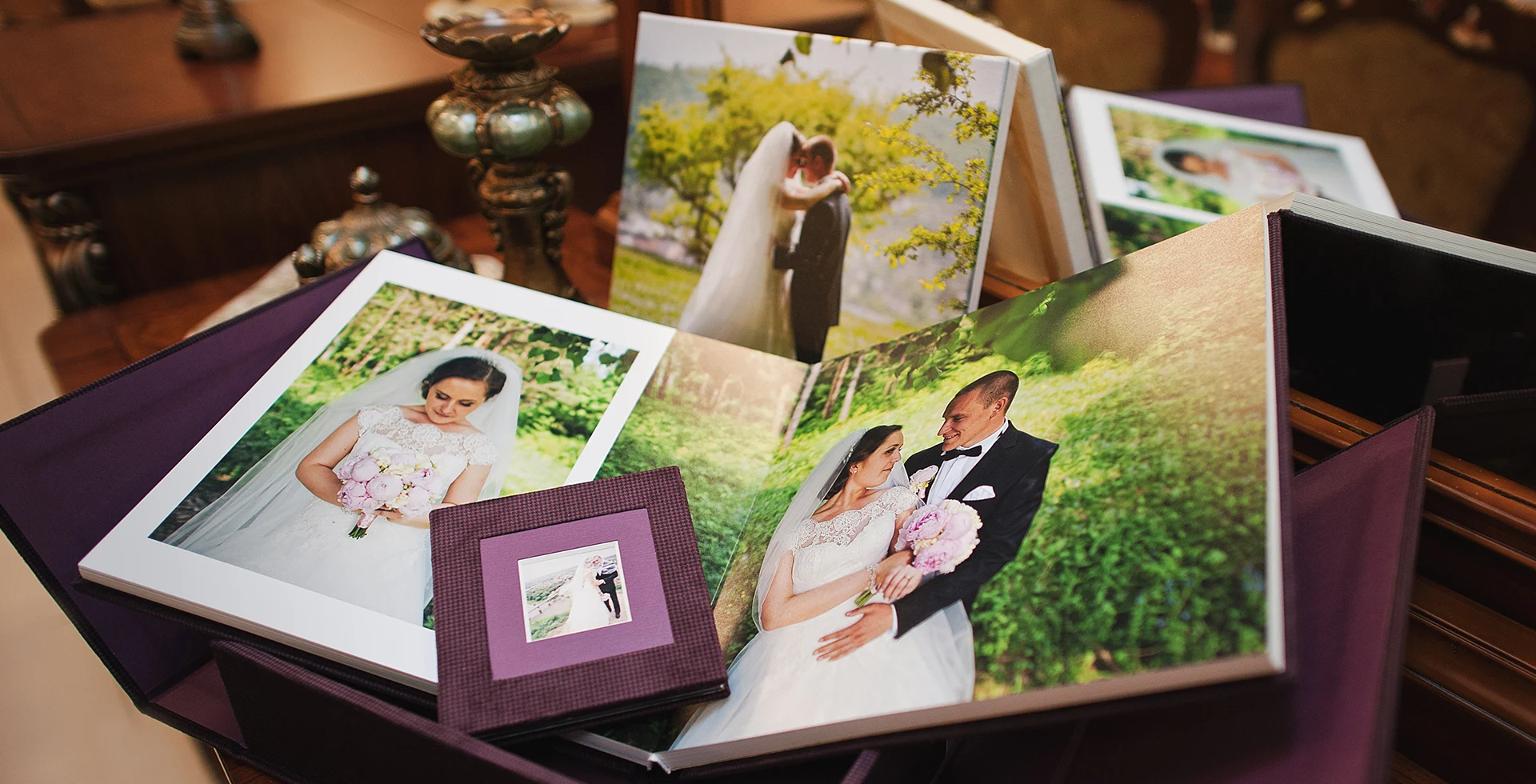
Fine art wedding photography services

Beyond basic coverage, capturing a celebration requires an editorial eye to weave candid moments into a luxury visual narrative that preserves the event’s authentic emotion.
Curating a distinctive photographic aesthetic

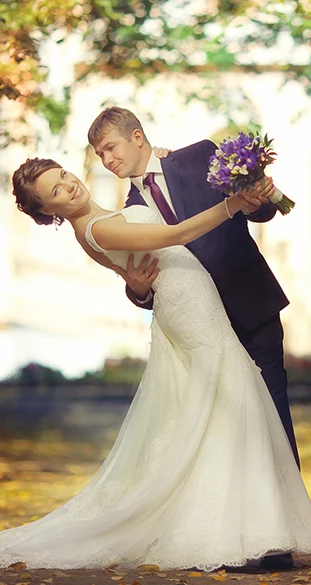
Clients select distinct editing styles shaping the heirloom album. Reportage tracks unposed moments without interference to capture raw storytelling. Conversely, fine art imagery prioritizes editorial composition and flattering light, utilizing medium format to create painterly aesthetics. Modern hybrid coverage blends these, ensuring candid storytelling and glamorous couple portraits are secured efficiently all day.
Advanced composition and technical creativity

Capturing authentic emotional resonance
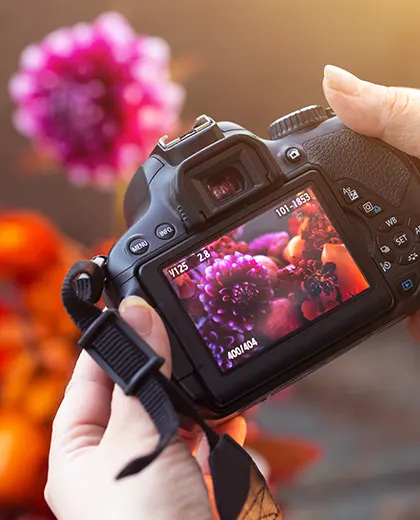
Authentic connection in wedding portraiture stems from anticipating micro-expressions before they vanish. During the ceremony vows or first look, a long focal length allows intimacy without intrusion, preserving the romantic bond. The focus shifts from rigid posing to prompting spontaneous interactions, allowing joyful laughter to surface organically. This empathetic method transforms static images into timeless heirlooms that reawaken feelings years later.
Professional equipment for flawless results

Full-frame sensor resolution
Professional sensors capture immense detail in dark reception venues, ensuring noise-free clarity even during dimly lit first dances and sparkler exits.

Prime lenses for subject isolation
Wide apertures create dreamy bokeh separation, isolating the bridal portrait to emphasize romantic connection amidst busy wedding environments.

Creative off-camera lighting
Strategic flash balances harsh sunlight or illuminates dim banquet halls, adding editorial flair to toasts and evening dance floor energy.

Stabilizers for cinematic video
Stabilization tools ensure fluid movement when capturing video clips or dynamic stills during the grand exit or ceremony recessional.

Drone aerial perspectives
UAV technology reveals the venue grandeur, offering panoramic views of scenic landscapes impossible to capture from ground level.

Dual slot data backup
Pro bodies record to dual cards simultaneously, providing an immediate backup against data loss for irreplaceable memories during the event.
Mastering diverse wedding environments
Highlighting indoor architecture
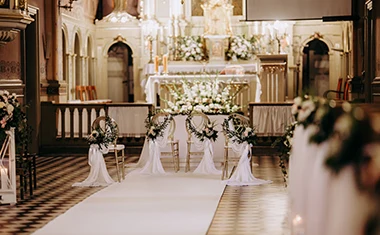
Historic venues with vaulted ceilings require balancing ambient glow with flash to showcase grandeur while keeping skin tones natural. Creatives use wide-angle optics to encompass the architectural scale without distorting subjects standing at the altar.
Controlling outdoor sunlight
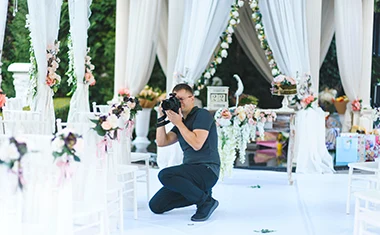
Garden ceremonies demand positioning relative to the sun to avoid shadows, utilizing open shade for soft portraits. Golden hour provides a window where low-angle light creates a warm glow ideal for romantic couple sessions.
Handling destination climates
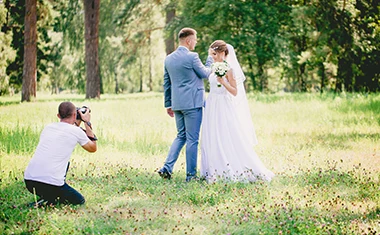
Tropical beaches or alpine locations present challenges, from lens humidity to bright snow reflecting light into the sensor. Understanding regional weather patterns ensures gear functions correctly and exposure remains balanced throughout the celebration day.