
Every wedding unfolds within a unique setting, and the places where couples choose to celebrate their union become far more than backdrops—they transform into integral characters in the visual story. From sun-drenched vineyards to intimate garden courtyards, from grand cathedral halls to minimalist urban rooftops, each location presents distinct photographic opportunities and challenges that directly influence the mood, composition, and emotional impact of wedding images.
Understanding how to work with diverse wedding venues and landscapes is essential for creating imagery that captures not just the couple, but the complete atmosphere of their special day. The relationship between location and photography goes beyond simply finding pretty views; it involves recognizing how architectural elements, natural features, light quality, and spatial characteristics can be leveraged to craft compelling visual narratives. This comprehensive exploration examines the fundamental principles of wedding place photography, offering practical insights into venue types, preparation techniques, lighting strategies, and compositional approaches that elevate wedding imagery from simple documentation to artful storytelling.
The venue selection reflects the couple’s personality, aesthetic preferences, and vision for their celebration. A rustic barn wedding communicates a different narrative than a formal ballroom affair, and these contextual elements profoundly influence photographic decisions. The physical environment establishes the visual palette—color schemes drawn from natural surroundings, textural contrasts between stone and fabric, spatial relationships that determine framing possibilities.
Beyond aesthetics, locations dictate technical considerations. A beach ceremony at sunset requires different exposure strategies than a dimly lit chapel service. Garden venues offer natural light advantages but variable weather risks, while indoor historic mansions provide architectural drama alongside lighting challenges. Recognizing these location-specific factors during the planning phase allows photographers to anticipate needs, prepare appropriate equipment, and develop shooting strategies that maximize each setting’s strengths while mitigating its limitations.
The emotional resonance of place also matters tremendously. Couples often select venues with personal significance—a family estate, the spot where they first met, or a landscape representing shared passions. Understanding these connections enables photographers to emphasize meaningful environmental details, creating images that resonate on deeper emotional levels beyond pure visual appeal.
Different location categories present distinct visual characteristics and technical requirements. Recognizing these patterns helps photographers adapt their approach efficiently while maintaining creative vision across diverse settings.
Gardens, beaches, vineyards, forests, and mountain venues offer abundant natural light and organic backgrounds that require minimal enhancement. These locations excel in providing varied compositions within compact areas—a couple framed by flowering arbors, silhouetted against ocean horizons, or positioned among vineyard rows that create natural leading lines.
The primary considerations include:
Natural settings reward photographers who embrace environmental unpredictability while remaining prepared with reflectors, diffusers, and quick adaptability when conditions shift unexpectedly.
Castles, manor houses, museums, and heritage buildings bring architectural grandeur and timeless elegance to wedding imagery. These venues feature dramatic staircases, ornate moldings, grand halls, and period details that add sophistication and visual interest.
Key photographic approaches include:
Historic venues often impose restrictions on lighting equipment placement and flash usage near artifacts, requiring photographers to work with available light more extensively and understand higher ISO performance of their equipment.
Rooftop terraces, industrial lofts, modern galleries, and city hotel venues offer clean lines, geometric patterns, and metropolitan energy. These settings suit couples seeking contemporary aesthetics with bold architectural elements and city skyline integration.
Effective strategies include:
Urban venues excel at providing striking nighttime opportunities, where city lights create bokeh effects and illuminated skylines add dramatic depth to couple portraits.
Thorough location preparation distinguishes confident, efficient shooting from reactive scrambling. Pre-wedding venue visits ideally occur at the same time of day as the scheduled ceremony and reception, revealing actual lighting conditions rather than assumptions.
During scouting sessions, prioritize these activities:
Creating a simple location map with marked photo spots, ideal timing notes, and potential challenges streamlines the wedding day workflow. This preparation enables quick transitions between locations and reduces time couples spend away from their guests during portrait sessions.
Communication with venue coordinators also proves invaluable—understanding setup timelines, exclusive access windows, and any planned lighting changes ensures photographers can maximize opportunities without conflicting with event logistics.
Light quality transforms identical locations into entirely different photographic environments. A garden photographed at noon under harsh overhead sun produces dramatically different results than the same garden during late afternoon’s warm, directional golden hour glow.
Seasonal variations significantly impact both light characteristics and landscape appearance. Spring weddings benefit from fresh blooms and gentle light, summer offers extended daylight hours but intense midday sun, autumn provides warm color palettes and softer light angles, while winter presents challenges with shorter days but potential for dramatic low-light scenarios and occasionally striking snow backdrops.
Understanding how to work with available light conditions involves:
Cloudy conditions, often perceived as limiting, actually provide beautifully even light ideal for portraits, eliminating harsh shadows and squinting while allowing flexibility in shooting direction. Recognizing these silver linings enables photographers to adapt confidently rather than viewing weather variations as purely problematic.
Effective landscape integration elevates wedding photography beyond isolated couple portraits into cohesive environmental storytelling. The relationship between subjects and their surroundings creates context, scale, and atmosphere that pure close-ups cannot achieve.
Layering compositional elements adds depth and visual interest—positioning couples in the midground with foreground framing elements like foliage or architectural details, and background landscape features that extend the visual narrative. This approach creates three-dimensional imagery that draws viewers into the scene rather than presenting flat, single-plane compositions.
Strategic techniques include:
The most compelling landscape-integrated wedding images feel effortless and natural rather than obviously posed. This authenticity emerges when photographers guide couples into flattering positions while allowing genuine interaction, letting the environment enhance rather than dominate the emotional content of the moment.
Understanding the fundamental relationship between wedding places and photographic storytelling transforms how you approach each unique venue. By recognizing the distinct characteristics of different location types, preparing thoroughly through scouting, mastering light variations across seasons and settings, and thoughtfully composing images that integrate couples with their surroundings, you create wedding photography that captures not just appearances but the complete sensory and emotional experience of the celebration within its chosen landscape.
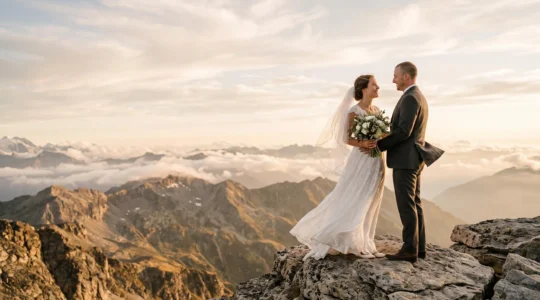
Mastering alpine wedding photography is less about gear and more about adopting an expeditionary mindset to manage environmental physics, compositional scale, and inherent risk. Altitude and cold don’t just feel different; they fundamentally alter equipment performance (like 40%+ faster battery…
Read more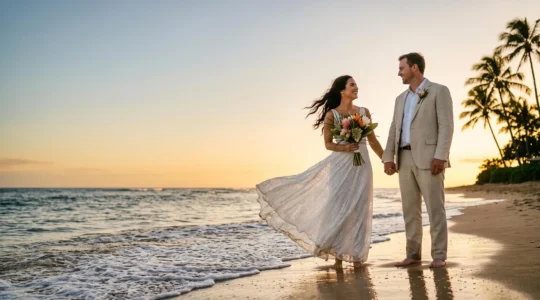
The greatest challenge in tropical beach wedding photography isn’t fighting harsh sun and sand—it’s mastering their predictable physics to create exceptional images. Intense equatorial light demands specific exposure and modification techniques, like underexposing and using high-speed sync flash, to avoid…
Read more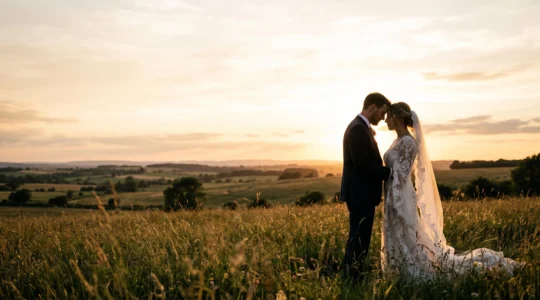
The biggest mistake in wedding photography is treating golden hour as a lucky bonus; it must be treated as a non-negotiable, engineered asset. Success depends on proactive timeline engineering and client education, not chance. Mastering backlighting and having adaptive strategies…
Read more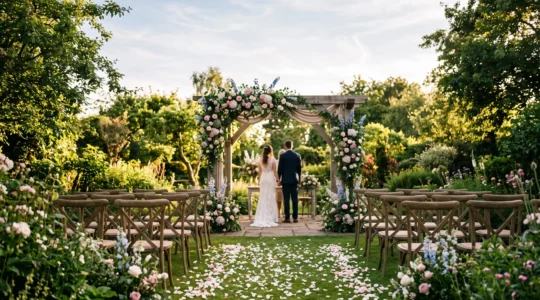
In summary: Master sun direction by positioning the couple at a 45-degree angle to the light source to create flattering, dimensional shadows. Seek out “open shade” from buildings or large trees to find soft, diffused light that eliminates harsh shadows…
Read more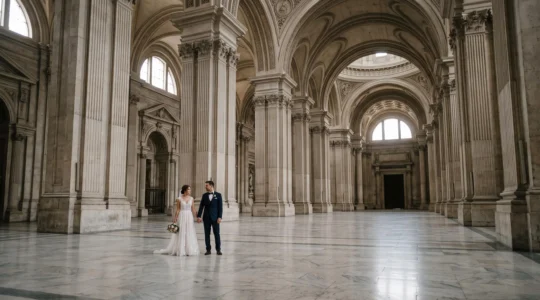
In summary: Effective scale communication is not about lens choice, but about mastering the visual grammar of space and perception. Use negative space to let architecture breathe, often composing for 60% of the frame to be empty space. Position human…
Read more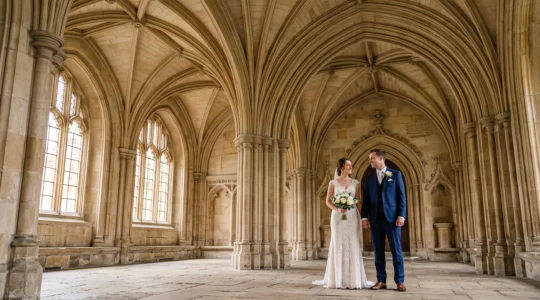
Distorted architectural photos are not an inevitable flaw of wide-angle lenses; they are a symptom of uncontrolled perspective that can be mastered. Achieve rectilinear purity by keeping the camera sensor perfectly parallel to the subject and finding the central axis…
Read more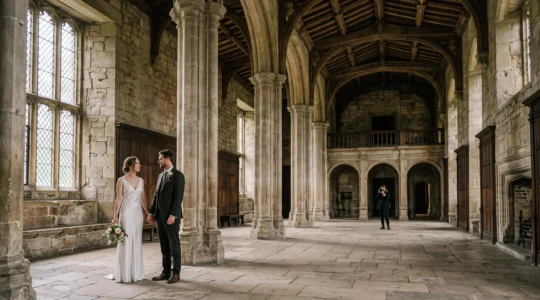
The key to stunning photos in heritage venues isn’t fighting the rules, but mastering the art of diplomatic collaboration and becoming a trusted conservation partner. Understand the conservation science behind flash and tripod bans to inform your technique and build…
Read more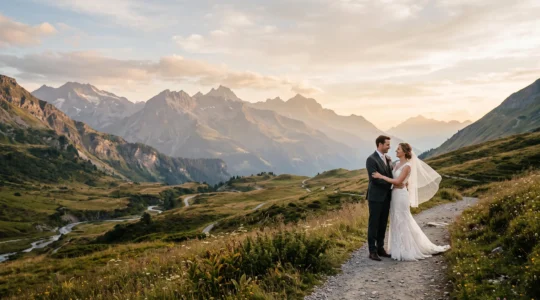
The key to majestic environmental wedding photos isn’t the landscape itself, but your intentional control over the couple’s relationship to it. Use compositional scale to dictate emotion: a tiny subject can evoke awe, while balanced proportions create intimacy. Master lens…
Read more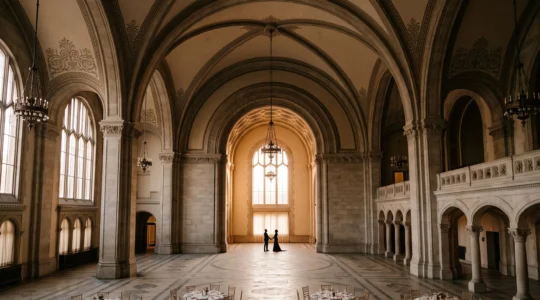
The key to capturing venue grandeur isn’t wider lenses, but a reverent understanding of architectural space that translates its three-dimensional story into a powerful two-dimensional image. Effective grandeur shots provide essential narrative context that elevates a portfolio into the luxury…
Read more