
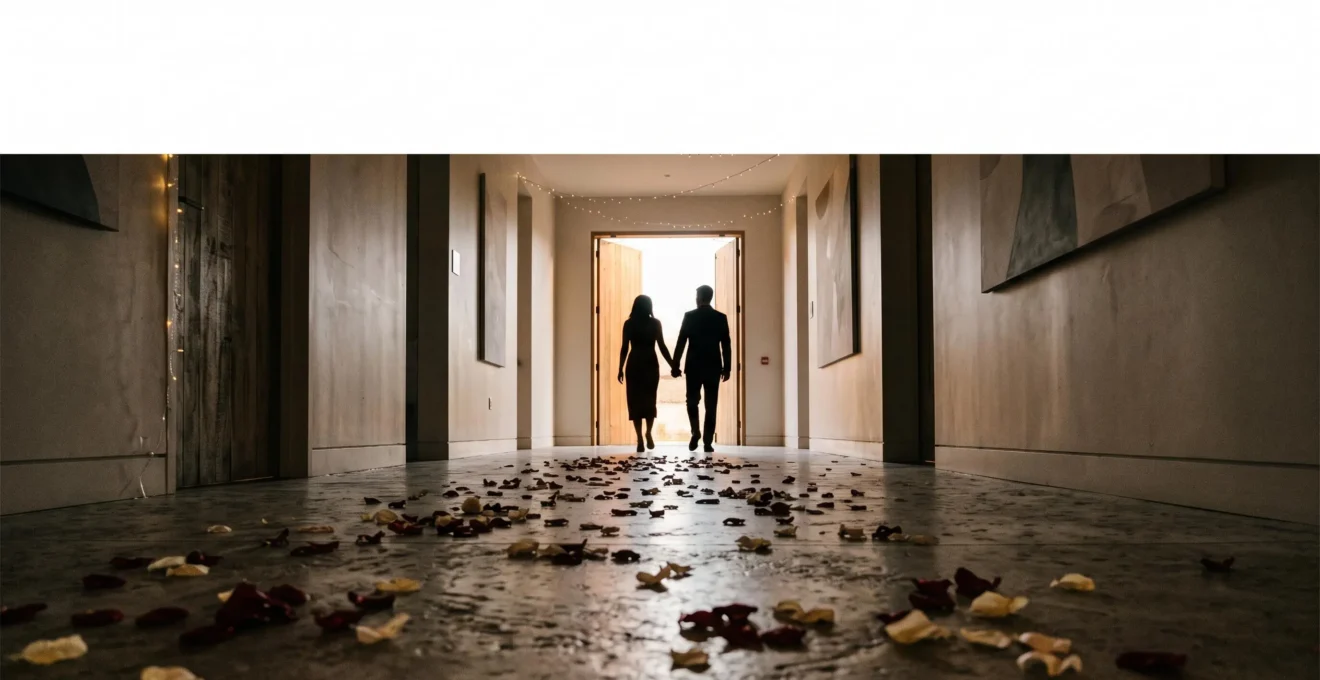
If your wedding galleries feel more like a disconnected checklist of “great moments” than a cohesive story, the problem isn’t your camera—it’s your script.
- A cinematic narrative is built on a three-act structure, not just a chronological timeline.
- Varying shot types (wide, medium, close-up) and weaving in guest “subplots” are essential for creating emotional rhythm and flow.
Recommendation: Shift your mindset from a moment-collector to a story-director. Intentionally build a narrative arc, and you’ll transform your work from a simple record into a timeless film.
You’ve nailed the shot. The bride’s tear, the groom’s first look, the perfect sunset portrait. Your gallery is full of technically proficient, emotionally charged images. Yet, when you deliver it, something feels off. The collection feels like a long, beautiful list rather than a story that flows. This is a common frustration for talented photographers who excel at capturing individual moments but struggle to connect them into a compelling narrative. The industry is saturated with advice to “tell a story” or “capture the details,” but this advice rarely explains the fundamental structure of storytelling itself.
Most photographers approach a wedding day chronologically, capturing events as they happen. This is logical, but it’s the mindset of a record-keeper, not a storyteller. A filmmaker, by contrast, understands that a story is not just a sequence of events, but a curated journey with a clear beginning, a rising tension, a climax, and a satisfying resolution. The real breakthrough comes when you stop thinking like a photographer who documents time and start thinking like a director who crafts emotion.
This guide will shift your perspective entirely. We will deconstruct the wedding day through the lens of cinematic structure. We’re moving beyond the simple shot list to explore the core principles of narrative arcs, character development (for the couple and their guests), pacing, and scene construction. You will learn not just *what* to shoot, but *why* you’re shooting it and how each frame contributes to the larger film of the day. The goal is to create a gallery that doesn’t just show what happened, but makes the viewer *feel* the entire emotional journey all over again.
This article provides a complete framework for structuring your wedding day coverage like a cinematic narrative. Follow along to see how each part of the day builds on the last to create a cohesive and emotionally resonant story for your clients.
Summary: How to Build Compelling Wedding Day Storytelling From Preparation Through to Final Exit
- Why Every Wedding Story Needs These 7 Narrative Beats to Feel Emotionally Complete
- How to Weave Parent and Guest Stories Into the Couple’s Narrative Without Losing Focus
- Wide Establishing Shots or Intimate Close-Ups: Which Ratio Creates Engaging Wedding Story Flow
- The Chronological Mistake That Makes Wedding Stories Feel Flat Despite Capturing Great Moments
- When to Abandon Comprehensive Coverage to Fully Commit to One Unfolding Story Moment
- How to Structure a Wedding Day Narrative Arc That Reads Like a Cinematic Love Story
- Why Wedding Galleries Feel Incomplete Without a Strong Grand Exit Closing Image
- How to Craft a Luxury Visual Narrative That Justifies £8,000+ Wedding Photography Fees
Why Every Wedding Story Needs These 7 Narrative Beats to Feel Emotionally Complete
A cinematic story isn’t just one long scene; it’s a series of smaller moments, or “beats,” that build upon each other to create emotional momentum. While the “7 beats” in the title is a conceptual framework, the core idea is that a single, powerful image is rarely enough. A gallery filled with only “hero shots” can feel disjointed. The real art is in building a small sequence around each key event. Think of a bride putting on her dress. The “hero shot” might be a beautiful portrait of her fully dressed, but the narrative beat includes the shot of her mother fumbling with the buttons, the close-up on the delicate lace, and the bride’s nervous exhale once it’s done. Each frame is a line in a stanza of a larger poem.
These beats are the fundamental building blocks of your narrative. They create rhythm and allow the viewer to experience a moment fully, rather than just observing it. Instead of taking one photo of the first dance, think in a sequence: the couple walking to the floor, the nervous smile they share, the first spin, a wide shot of guests watching, and the final embrace. This turns a single event into a mini-story with a beginning, middle, and end. Trusting the moments you are naturally drawn to is often the best guide, as they tend to be where the most honest and powerful sequential stories unfold.
A common mistake is to get the “safe shot” and immediately move on, hunting for the next big moment. A story-driven photographer resists this urge. They commit to a scene, working it from different angles and perspectives until the full emotional beat has been captured. This requires patience and anticipation, but it’s what separates a collection of snapshots from a deeply felt narrative. The goal is to create sequences where the emotion, pacing, and composition guide the viewer through the moment, making them feel like they were right there in the room.
How to Weave Parent and Guest Stories Into the Couple’s Narrative Without Losing Focus
The main love story belongs to the couple, but a great film is rarely a two-person show. The reactions, emotions, and interactions of parents and guests are the subplots that add depth, context, and richness to the central narrative. A wedding gallery that only features the couple can feel isolated and sterile. The key is to capture these “B-stories” without losing the main thread. Your primary focus remains the couple, but your peripheral vision should be constantly scanning for these supporting narratives.
Think of each significant guest interaction as a mini-film. It’s not just about getting a photo of someone giving a speech; it’s about capturing the entire arc of that moment. A powerful case study comes from a documentary photographer who treats every toast this way. They deliberately photograph the speaker gathering themselves beforehand, the potential tearful breakdown during the speech, and the eruption of laughter or applause from the table afterward. This three-beat structure (buildup, peak, aftermath) transforms a simple event into a compelling character moment that enriches the overall story. These subplots show *why* the couple is loved and provides a chorus of emotion that supports their journey.
These moments are often quiet and unplanned. It could be the father of the bride seeing her in her dress for the first time, an impromptu hug between old friends during the reception, or the silent tears of a grandparent during the vows. A story-focused photographer is attuned to this emotional energy. They watch for these subtle interactions, understanding that a quiet giggle or a shared glance can be just as powerful as the couple’s first kiss. By weaving these threads into the main gallery, you create a tapestry of interconnected stories, making the wedding day feel like a communal celebration of love, not just a private one.
Wide Establishing Shots or Intimate Close-Ups: Which Ratio Creates Engaging Wedding Story Flow
A filmmaker would never shoot an entire movie in close-up, nor would they shoot it entirely in wide shots. They instinctively understand that the interplay between an expansive sense of place and an intimate emotional detail is what creates a dynamic viewing experience. As a wedding storyteller, you must adopt this same rhythm. The question isn’t whether to use one *or* the other, but how to balance them to control the narrative’s pace and focus. The ratio is not a formula, but a feeling guided by the story you are telling in that exact moment.
The wide establishing shot is your opening scene. It sets the stage, providing context and scale. It’s the grand view of the church, the sweeping landscape of the venue, the full shot of the reception hall buzzing with guests. These images give the viewer a sense of geography and atmosphere, grounding the story in a specific time and place. Without them, the intimate moments can feel like they are floating in a void, disconnected from the larger event. They are the moments to breathe, to take in the environment before diving into the action.
Conversely, the intimate close-up is your tool for emotional revelation. It’s where the core of the story lives. This is the macro shot of the wedding bands, the texture of the lace on a dress, the tear welling in a mother’s eye, or the tightly clasped hands of the couple during the vows. These shots create a powerful sense of connection and empathy, drawing the viewer directly into the heart of the moment. They force the viewer to focus on a single, powerful detail, stripping away all distractions. An effective story flows between these two extremes, using the wide shot to say “Here is where we are,” and the close-up to say “And this is what it feels like.”
As you can see in the image above, the power of a close-up lies in its ability to convey intimacy and texture that a wider shot simply cannot. The flow of a great wedding gallery depends on this constant dance between context and emotion, between the epic and the intimate. Judging your work on its storytelling capability means evaluating how well you master this flow. The most engaging stories are told by photographers who can seamlessly zoom from the 30,000-foot view down to the microscopic, emotional detail, and back again.
The Chronological Mistake That Makes Wedding Stories Feel Flat Despite Capturing Great Moments
The single biggest mistake that flattens a wedding gallery is adhering too strictly to a literal, minute-by-minute timeline. This is the fundamental error of the record-keeper, not the storyteller. While the day unfolds chronologically, emotions do not. A filmmaker understands this and will often manipulate time for narrative effect. Your job is not to create a perfect historical document, but an emotional one. A story that feels jumpy and lacks cohesion is often the result of prioritizing time over feeling.
The solution is to embrace the concept of “emotional chronology.” This means sequencing parts of your gallery based on their mood and energy, rather than the exact time they occurred. You might, for example, group a series of quiet, tender moments together, even if they happened hours apart. Perhaps a shot of the bride’s grandmother quietly observing the ceremony could be paired with a soft, intimate portrait of the couple from later in the evening. This creates an emotional arc—a “chapter” of quiet reflection—that is more powerful than if the images were separated by hundreds of photos of the cocktail hour.
Case Study: Scoring the Day with Emotional Chronology
One wedding filmmaker has perfected this by thinking of the day in terms of a musical score. As they explain in their approach to narrative building, they deliberately match the mood of each sequence with a corresponding tone. They might pair a soft, acoustic melody with the tender, anticipatory moments of bridal prep, and then transition to a full, soaring orchestral sound for the triumphant post-ceremony celebration. This mindset can be directly applied to still photography: sequence the soft, gentle images together and the high-energy, vibrant images together to create distinct emotional movements within your gallery, guiding the viewer’s feelings like a conductor.
This does not mean you should scramble the entire day. The overall three-act structure of preparation, ceremony, and reception should remain intact. But within those acts, you have creative license. The getting ready photos don’t have to be a rigid sequence. You can intercut a nervous groom with a laughing bride, even if they were in different buildings. The goal is to build an experience that flows emotionally. By letting go of the chronological straitjacket, you unlock the ability to craft a story that is not only seen but deeply felt.
When to Abandon Comprehensive Coverage to Fully Commit to One Unfolding Story Moment
In the quest to “capture everything,” many photographers end up capturing the surface of everything and the depth of nothing. A documentary filmmaker knows that sometimes the most powerful decision is to ignore 99% of what’s happening to focus entirely on the 1% that truly matters. There will be moments on a wedding day when a real, unscripted story begins to unfold. The temptation is to grab a “safe” shot and move on, to keep fulfilling your mental checklist. The storyteller’s choice is to abandon that checklist, plant your feet, and commit fully to the unfolding scene.
This requires a high level of presence and anticipation. As one photographer notes, “documentary wedding photography is about waiting, anticipation, actively seeking the moments.” You must be more than a camera operator; you must be an empathetic observer, attuned to the subtle shifts in energy in a room. Is a small group of friends erupting into nostalgic laughter? Is a father getting ready to deliver a heartfelt, off-the-cuff piece of advice to his son? When you sense a genuine story starting, that is your cue. Abandon the wide shot of the room and get in close. This is the moment to become invisible and let the scene play out, capturing its beginning, middle, and end.
Of course, this is a calculated risk. By committing to one story, you are consciously choosing to miss others. This is where your pre-wedding preparation and rapport-building pay off. Understanding what is most important to the couple helps you identify which potential stories are worth a deep dive. If the bride told you her relationship with her grandmother is the most important thing in the world, then the moment her grandmother pulls her aside for a quiet word is a story you commit to, even if it means missing the shot of a cousin doing a funny dance. This isn’t about being comprehensive; it’s about being meaningful.
Your Story-Sensing Framework: A Checklist for Committing to a Scene
- Know the Vision: Meet the couple ahead of time to learn their vision and which relationships and moments matter most to them. This is your story compass.
- Build Rapport: Interact genuinely with guests throughout the day. People are more likely to let authentic moments unfold around someone they feel comfortable with.
- Read the Cues: Stay hyper-focused on anticipation, emotional cues, and candid interactions. Learn to recognize the subtle signs that a scene is about to begin, so you can be in position before it peaks.
- Assess the Arc: Quickly ask yourself: Does this moment have a potential beginning, middle, and end? If so, it’s a story worth pursuing.
- Commit and Capture: Once you decide, commit fully. Work the scene from different angles and perspectives, capturing the action and the reactions until the story reaches its natural conclusion.
How to Structure a Wedding Day Narrative Arc That Reads Like a Cinematic Love Story
Every great film, from epic blockbusters to intimate dramas, is built on a simple, timeless foundation: the three-act structure. As a wedding storyteller, this is your most powerful tool. By consciously mapping the wedding day onto this structure, you transform a series of events into a cohesive, emotionally resonant narrative. Your gallery will no longer be just a collection of photos; it will be a film in still frames. As the creative team at Blauw Films states, “The setup, or the first act, lays the foundation which the narrative is built upon.”
Act One: The Setup. This is the beginning of your story, encompassing all the pre-ceremony preparations. Your goal here is to introduce the main characters (the couple), establish the setting, and build a sense of anticipation. This is where you capture the details—the dress, the rings, the vows—but more importantly, the mood. The nervous energy, the quiet excitement, the support of close family and friends. Your images should be filled with potential, creating questions in the viewer’s mind. Who are these people? What is this day about to become? This is the “before” that gives the “after” its power.
Act Two: The Confrontation. This term sounds dramatic, but in storytelling, “confrontation” simply means the central event where the story’s main action unfolds. For a wedding, this is the ceremony itself. This is where the tension built in Act One is addressed. The “will they?” becomes “they do.” Your photography here should capture the climax of this act: the first look, the walk down the aisle, the exchange of vows, and the first kiss. It’s the emotional peak of the day, the turning point where the couple’s status officially changes. Following this is the immediate aftermath—the joyful recessional and the celebratory moments that release all the built-up tension.
Act Three: The Resolution. This is the “new normal” after the central event. It begins with the reception and carries through to the final exit. The couple is now married, and this act is about celebrating that new reality. The energy shifts from sacred and tense to joyful and relaxed. This is the act for capturing the couple interacting with their community, the speeches that add backstory and depth, the wild dancing, and the quiet, stolen moments of a couple realizing they are finally married. The resolution isn’t just an after-party; it’s the answer to the question posed in Act One, showing what life looks like on the other side of the big moment.
Why Wedding Galleries Feel Incomplete Without a Strong Grand Exit Closing Image
Imagine a great film that ends abruptly after the climax. The hero wins, and then… the credits roll. It would feel jarring and unsatisfying. The same is true for a wedding gallery. The Grand Exit is not just a logistical end to the night; it is the final scene of your film, the resolution of your third act. It’s the visual “happily ever after” that provides a sense of closure and catharsis for the viewer. A gallery that just fizzles out with random dancing shots feels incomplete because it lacks a definitive ending. The final image is the last word; it should be chosen with intention.
The Grand Exit is powerfully symbolic. As the team at George Street Photo & Video notes, “It depicts the transition into something new and exciting—a heartfelt sendoff by your loved ones.” This is the moment the couple, now a married unit, leaves the celebration and steps into their new life together. Your job is to capture this transition. Whether it’s through a tunnel of sparklers, a shower of confetti, or simply walking out into the night, the image should convey a sense of journey and forward momentum. It’s the bookend to the anticipatory images of Act One.
Photographing a narratively satisfying exit requires treating it as a crucial final chapter. It’s not just about getting a clear shot of the couple. You should also capture the details that add richness to the sequence, like close-ups of glowing sparklers or falling confetti. Most importantly, capture genuine movement and energy. Have the couple walk, run, or even dance through their send-off. A static, posed exit feels staged; an energetic, moving exit feels like a real, triumphant conclusion. This final sequence is your last chance to leave an emotional impression, ensuring the story feels whole and deeply satisfying.
Key Takeaways
- Shift from a chronological “shot list” mindset to a cinematic three-act structure (Setup, Ceremony, Celebration).
- Enrich your main narrative by capturing guest and family “subplots” using mini-arcs of buildup, peak emotion, and aftermath.
- Control the story’s pace and emotion by intentionally balancing wide “establishing shots” for context with intimate “close-ups” for emotional depth.
- Sequence images based on “emotional chronology” (mood and energy) rather than a strict timeline to create a more powerful narrative flow.
How to Craft a Luxury Visual Narrative That Justifies £8,000+ Wedding Photography Fees
So, how does this cinematic, story-driven approach translate to the business of photography? It’s simple: this is what justifies a luxury price point. A client can find thousands of photographers who can deliver a checklist of well-exposed, technically proficient images. Far fewer can deliver a cohesive, emotionally resonant narrative that feels like a timeless film. When you sell a story, not just photos, you elevate your service from a commodity to an art form. And art commands a premium.
The luxury market isn’t just about higher prices; it’s about deeper value. A premium fee is justified by a combination of experience, expertise, and a unique, valuable offering. The ability to craft a sophisticated visual narrative is the epitome of this. It demonstrates a level of mastery that goes far beyond camera settings. It shows you are an artist and a director, not just a technician. In the United States, a 2024 survey found that the top tier of professionals charge an average of $9,420 for their most popular package. This price point is not for “more photos”; it’s for a better, more meaningful story.
Your ability to articulate this value is crucial. When meeting with potential clients, don’t just show them your best individual photos. Show them a full gallery, and walk them through the narrative arc. Explain how you built the story, from the anticipatory quiet of Act One to the triumphant resolution of Act Three. Explain how you wove in the story of their loved ones to create a richer tapestry. As one expert on wedding photography costs notes, pricing hinges on four primary factors: experience, location, value, and expertise. When you position yourself as a narrative expert—a visual storyteller—you are maximizing your value and giving clients a compelling reason to invest in you. They aren’t just paying for you to be there on their wedding day; they are commissioning a piece of their family’s history, crafted with the care and artistry of a filmmaker.
Start today by applying this cinematic framework to your next wedding. Before you pick up your camera, think about your three acts. As you shoot, look for the subplots and narrative beats. And when you edit, prioritize emotional chronology over literal time. This shift in mindset is the single most impactful step you can take to transform your work and your business.