
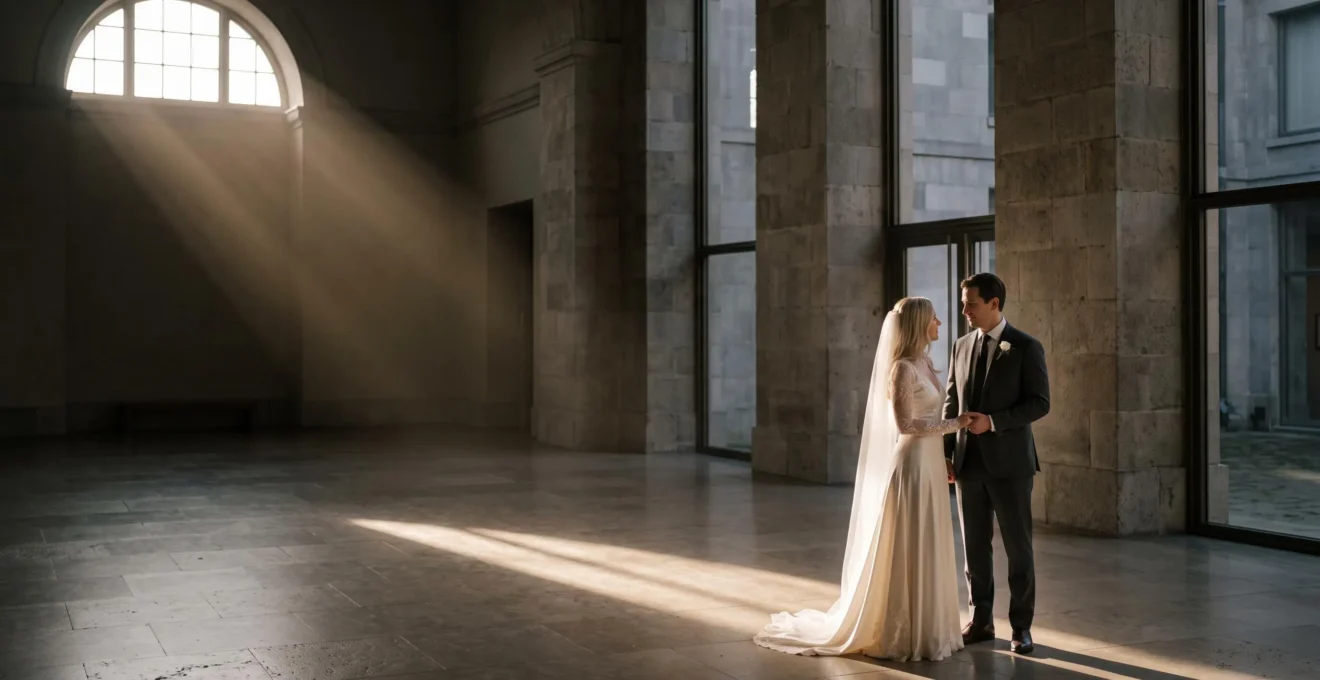
Contrary to popular belief, fine art wedding photography is not about finding soft light and using a wide-aperture lens; it’s a complete paradigm shift from documenting events to curating museum-grade art.
- Success depends on translating fleeting moments into timeless compositions using principles of painterly light and intentional negative space.
- The goal is to evoke emotional resonance in the viewer, not simply document an emotion felt by the couple.
Recommendation: Stop thinking like a photojournalist capturing what’s there and start seeing like an editorial curator, building a visual narrative sequence from the day’s raw material.
For the technically proficient wedding photographer, a frustrating plateau often emerges. The images are sharp, well-exposed, and competently composed, yet they lack a certain soul. They are excellent records of an event, but they don’t feel like art. The common advice—shoot at f/1.4, find the golden hour, use a film preset—only polishes the surface of this problem. It leads to a portfolio of beautiful but often interchangeable images that are good, but not transcendent. These techniques are ingredients, but they are not the recipe itself.
The quest for gallery-worthy wedding imagery is not about adding another lens to your bag or another preset to your collection. It requires a fundamental shift in perception. The leap from documentarian to artist happens when you stop seeing a wedding as a series of events to be captured and start seeing it as a source of raw material—light, emotion, texture, and form—from which to construct a cohesive visual story. This is the core of an editorial, fine art approach: the relentless pursuit of translating a feeling, not just an action, into a permanent, powerful image.
This guide deconstructs that process. We will abandon the platitudes of event coverage and delve into the artistic principles that underpin true fine art photography. We will explore the tangible value this approach creates, the specific tools that facilitate a painterly aesthetic, and the crucial mindset needed to balance authentic emotion with rigorous composition. The objective is to move beyond merely creating beautiful photos and begin crafting a visual legacy.
This article provides a structured path to elevate your work, exploring the mindset, techniques, and aesthetic choices that separate event coverage from true fine art. The following sections break down this artistic transformation step by step.
Summary: A Guide to Creating Fine Art Wedding Photography
- Why Fine Art Wedding Photographers Charge £12,000+ While Documentary Shooters Average £3,500 in the UK
- How to Achieve Authentic Fine Art Wedding Aesthetic With Medium Format Digital Systems
- Muted Film Tones or Rich Digital Colour: Which Grading Approach Creates Timeless Fine Art Wedding Images
- The Fine Art Trap of Creating Beautiful Images That Feel Staged and Emotionally Disconnected
- When Fine Art Composition Opportunities Emerge Naturally During Unscripted Wedding Moments
- Why Minimalist Wedding Photos With Intentional Emptiness Feel More Emotionally Powerful Than Busy Frames
- Why Some Portrait Light Feels Soft and Flattering While Other Light Feels Harsh and Unflattering
- How to Develop an Editorial Eye That Transforms Wedding Coverage Into Magazine-Worthy Stories
Why Fine Art Wedding Photographers Charge £12,000+ While Documentary Shooters Average £3,500 in the UK
The significant price disparity between fine art and documentary wedding photography is not a simple matter of supply and demand; it reflects a fundamental difference in the perceived value of the final product. A documentary photographer is hired to provide a service: the comprehensive coverage of an event. A fine art photographer, however, is commissioned to create a product: a collection of bespoke art pieces. As the Voice-Tribune editorial staff notes, “Today’s couples hire artists whose work belongs in galleries.” This reframes the entire transaction from hourly labour to the acquisition of unique, lasting artworks.
This distinction is rooted in the process itself. The fine art approach demands a higher level of creative direction, meticulous curation, and post-production artistry. It involves not just capturing what happens, but interpreting it, shaping it with light and composition, and refining it into a cohesive, evocative narrative. The photographer’s vision is the primary asset being sold. This elevated service commands a premium because the outcome is not just a record, but an heirloom. In the UK market, this value is quantifiable; while standard packages may hover around the national average, industry pricing data shows that fashion and fine-art specialists can command fees starting from £3,000–£5,000 and reaching well into five figures for a single commission. This premium is the market’s acknowledgment that the photographer is delivering not just memories, but a curated visual legacy.
How to Achieve Authentic Fine Art Wedding Aesthetic With Medium Format Digital Systems
While the artist’s eye is paramount, the tools can undeniably shape the final aesthetic. For many fine art photographers, medium format digital systems are not a luxury but a deliberate choice to achieve a specific painterly quality that is difficult to replicate. The “medium format look” is not about a higher megapixel count; it is about the physical properties of the sensor and how they render light and depth. The distinction begins with sensor size; an analysis by B&H Photo highlights that a typical medium format sensor is significantly larger than full-frame, with measurements like 44 x 33mm versus the standard 24 x 36mm.
This larger surface area creates a more gradual and pleasing fall-off from focus to out-of-focus areas, lending subjects a three-dimensional “pop” and separation from the background that feels more akin to a large canvas painting than a photograph. Furthermore, these sensors often capture a greater bit depth, resulting in subtler and richer tonal transitions. This translates into creamy skin tones, delicate highlight roll-off, and deep, detailed shadows. As one photographer described the transition, “It’s like going from a box of 24 colors to one with a new box with 120 colors.” This expanded tonal palette is the foundation of the rich, textural, and luminous quality that defines the fine art aesthetic.
As you can see in the texture of the fabric, the larger sensor’s ability to capture minute shifts in light and shadow creates a tangible, almost tactile quality. The light doesn’t just illuminate the subject; it describes its form and texture with a depth and subtlety that elevates the image from a simple record to a sensory experience. This is the essence of the painterly rendering that medium format systems facilitate.
Muted Film Tones or Rich Digital Colour: Which Grading Approach Creates Timeless Fine Art Wedding Images
Color grading is not a final, corrective step but a core narrative decision. The choice between the desaturated, nostalgic quality of “muted film tones” and the vibrant, present-day feel of “rich digital colour” fundamentally alters the emotional resonance of an image. There is no single “correct” approach; the most effective choice is the one that best serves the story you are trying to tell. The fine art “film look,” often described as being “characterized by medium format film, soft and luminous tones,” is popular because it immediately evokes a sense of timelessness and romance. It creates a dreamlike quality, suggesting a memory rather than a present reality.
Conversely, a grading approach that embraces the full, rich palette of a modern digital sensor can create a sense of hyper-realism and “eternal presence.” These images feel immediate, vibrant, and alive. They anchor the moment in a powerful, tangible reality. The decision should be driven by the specific moment being captured. A quiet, intimate portrait might benefit from the gentle, nostalgic rendering of a muted palette, while a high-energy moment of celebration could be amplified by rich, punchy colours. A master artist uses both, building a dynamic colour narrative throughout the wedding day rather than applying a single, monolithic look.
This comparative table breaks down the core characteristics and narrative functions of each approach, providing a framework for making intentional colour decisions.
| Aspect | Muted Film Tones | Rich Digital Colour |
|---|---|---|
| Emotional effect | Nostalgic, dreamlike, half-remembered feeling | Hyper-real, immediate, ‘eternal presence’ |
| Grain & texture | Visible organic grain adds intimacy and authenticity | Clean, crisp micro-contrast |
| Dynamic range handling | Softer highlight roll-off, gentle shadow density | Wider tonal latitude, punchier contrast |
| Best narrative use | Quiet, intimate, reflective moments | Peak celebration and high-energy moments |
As this analysis of stylistic choices demonstrates, the power lies not in choosing one over the other, but in understanding when and why to deploy each to strengthen the emotional core of your imagery.
The Fine Art Trap of Creating Beautiful Images That Feel Staged and Emotionally Disconnected
One of the greatest risks in pursuing a fine art aesthetic is over-direction. In the quest for the perfect composition and flawless light, it is easy to create images that are technically beautiful but emotionally hollow. This is the “fine art trap”: producing a gallery of perfectly posed mannequins. The antidote is not to abandon direction but to refine it. The goal should be to create a space for genuine emotion to occur within a beautifully composed frame, rather than to manufacture the emotion itself. This approach shifts the focus from posing to prompting.
Instead of saying, “Now smile,” you might ask the couple to tell each other what they were thinking during the ceremony. This subtle prompt invites a real, unscripted emotional response—a quiet tear, a burst of laughter, a knowing glance. The photographer’s job is to anticipate this moment and have the composition ready. This is the essence of what photographer Rachel Veltri describes as an approach that “prioritizes emotion over action.” It’s about capturing the internal feeling, not the external performance. This requires patience, empathy, and the ability to make a couple feel comfortable enough to be vulnerable in front of the lens. True emotional resonance is born from authenticity, not perfection.
The image above illustrates this principle. It is not a “say cheese” smile; it is the culmination of a genuine moment. The imperfect, wind-swept hair and the natural creases around the eyes are not flaws to be corrected but signifiers of authenticity. The composition is controlled, but the emotion is real. This delicate balance is the hallmark of masterful fine art wedding photography.
When Fine Art Composition Opportunities Emerge Naturally During Unscripted Wedding Moments
While directed portraits are a cornerstone of fine art wedding photography, a true master learns to see and capture gallery-worthy compositions within the unscripted, photojournalistic moments of the day. This is where the artist’s eye truly separates itself from the documentarian’s. It requires a state of constant observation, not just for “key moments” like the kiss or the first dance, but for the subtle interplay of light, geometry, and human gesture that occurs constantly in the background.
This means training your eye to see beyond the central action. A fine art opportunity might be the way a single beam of light strikes a floral arrangement, creating a perfect still life. It could be the elegant gesture of a guest’s hand against a dark suit, forming a study in contrast and form. It might be the stark, graphic shadow cast by a row of chairs before the guests arrive. These are the quiet, interstitial moments that, when composed with intention, add incredible depth and texture to the final gallery. They provide a sense of place and atmosphere that elevates the collection from a series of portraits to a complete, immersive story.
Developing this skill involves a shift in mindset. You must become a curator of reality, constantly scanning the environment for vignettes that align with classical principles of composition—leading lines, symmetry, framing, and balance. It is about isolating order and beauty from the chaos of a live event. By capturing these found compositions, you create a richer, more sophisticated narrative that demonstrates a vision extending far beyond the couple themselves.
Why Minimalist Wedding Photos With Intentional Emptiness Feel More Emotionally Powerful Than Busy Frames
In a visual world saturated with information, emptiness can be the most powerful statement a photographer can make. Minimalist compositions that embrace negative space are often more emotionally resonant than busy, cluttered frames because they give the viewer’s eye a place to rest and their mind room to feel. This “intentional emptiness” is not a void; it is an active compositional element that serves to isolate the subject, amplify emotion, and create a sense of scale and atmosphere.
By placing a couple small in a vast landscape or against a clean architectural backdrop, the photographer emphasizes their connection and solitude. The surrounding space acts as a quiet frame that draws all attention to the subjects’ posture, their interaction, and the emotional bond between them. As photographer Vik Photo wisely notes, “This isn’t about making your image feel empty. It’s about balance.” The emptiness must be deliberate, its shape and tone as carefully considered as the subject itself. It can create feelings of peace, grandeur, intimacy, or even loneliness, depending on how it is used. A busy frame tells the viewer everything at once; a minimalist frame invites the viewer to look closer and engage their own imagination.
This image demonstrates the power of intentional emptiness. The vast, empty hall does not detract from the couple; it magnifies their presence. The quiet, contemplative atmosphere is the direct result of using negative space as the dominant element. The viewer is not distracted by extraneous detail and is instead free to focus on the quiet intimacy of the couple within the grand space, creating a powerful and lasting emotional impact.
Why Some Portrait Light Feels Soft and Flattering While Other Light Feels Harsh and Unflattering
Light is the raw material of photography. As the legendary Annie Leibovitz stated, “Light is the essence of photography. It’s what makes an image come alive.” The distinction between flattering and unflattering light comes down to one primary factor: the quality of the light, determined by its size relative to the subject. Soft, flattering light comes from a large light source (like a large window, an overcast sky, or a reflector). This light “wraps” around the subject’s features, creating soft-edged shadows and gentle transitions from light to dark. This minimizes skin texture and creates a pleasing, sculptural effect.
Harsh light, conversely, comes from a small, direct source (like the midday sun or an on-camera flash). It creates hard-edged, high-contrast shadows that can accentuate texture, create unflattering shapes, and cast deep shadows under the eyes and nose. A fine art photographer’s job is not simply to find good light, but to *create* or *modify* it. This can mean moving a couple into the “clean” shade of a building, using a large reflector to bounce soft light back into their faces, or even using a strobe with a large softbox to overpower harsh sunlight. The goal is to achieve a painterly light—light that has direction, quality, and form, much like the chiaroscuro of a Rembrandt portrait. This deliberate shaping of light is what transforms a simple snapshot into a timeless piece of art.
Key Takeaways
- Shifting from a documentarian to an artistic curator is the foundation of fine art wedding photography; your job is to interpret, not just record.
- The quality of light is more important than the quantity. Learning to see and shape painterly light is the most critical technical skill.
- True fine art imagery balances meticulous composition with authentic emotion, creating a space for real moments to unfold within a directed frame.
How to Develop an Editorial Eye That Transforms Wedding Coverage Into Magazine-Worthy Stories
Developing an “editorial eye” is the final synthesis of all these principles. It is the ability to see a wedding day not as a chronological checklist of events, but as a three-act story with a distinct visual arc. It’s the difference, as photographer Peter Lindbergh suggested, between a movie and a book: “It’s like reading a book instead of watching a movie.” An editorial approach provides the narrative structure, the quiet details, and the atmospheric scenes that give the “hero” shots their context and emotional weight. This means capturing establishing shots of the venue, detailed close-ups of significant objects, and candid portraits of guests that together build a complete, immersive world.
This process of visual curation extends long after the wedding day. In post-production, the editorial eye is ruthless. It involves culling images not just for technical flaws, but for their contribution to the overall narrative. A gallery of 300 perfectly sequenced, impactful images tells a far more powerful story than a folder of 1,000 competent but repetitive ones. This curated selection is then crafted into a final product, often a fine art album, that serves as a tangible, museum-grade legacy.
Case Study: Luxury Fine Art Albums as Museum-Grade Visual Legacies
An editorial trend piece from the Voice-Tribune documents how modern fine-art wedding albums have become art objects in their own right. Featuring materials like Italian calfskin covers and hand-torn cotton-rag paper with pigment prints built to last for centuries, these albums position the final gallery as a curated visual legacy rather than a simple chronological record. As the piece details, this approach, directly mirroring the curation of a museum exhibit, is what elevates event coverage into a story worthy of preservation. This demonstrates how an editorial, three-act curation approach transforms the work into a timeless artifact.
Ultimately, the editorial eye is a commitment to storytelling over simple documentation. It requires seeing every element—the light, the composition, the emotion, the colour grade, and the final sequence—as a deliberate choice in service of a single, cohesive, and powerful narrative.
Your Action Plan: Cultivating an Editorial Eye
- Define the Narrative: Before the wedding, speak with the couple to understand the emotional core of their story. What are the three key feelings you want the final gallery to evoke? Write them down.
- Create a “Shot Idea” List: Go beyond the standard shot list. Think in terms of story beats: an “establishing shot” of the empty venue, a “detail shot” that tells a story, a “candid portrait” of a key family member.
- Practice “Found Compositions”: During your next shoot, dedicate 15 minutes to ignoring the main action. Actively search for and photograph three abstract compositions of light, shadow, and texture within the environment.
- Curate with a “One-Year” Test: When editing, for every image you consider keeping, ask yourself: “Will this image still be powerful and interesting to a stranger in one year?” If the answer is no, it’s likely not strong enough for the final story.
- Sequence for Emotion: When building the final gallery or album, arrange the images to create an emotional arc. Don’t just follow the timeline. Juxtapose a high-energy shot with a quiet, contemplative one to create narrative rhythm.
To begin this transformation in your own work, start by applying one of these principles to your very next project. Choose to focus on shaping light, or on finding natural compositions, and see how this single, intentional shift begins to elevate your photography from a record to a work of art.